
How Therapists Show Up in ChatGPT and AI Search
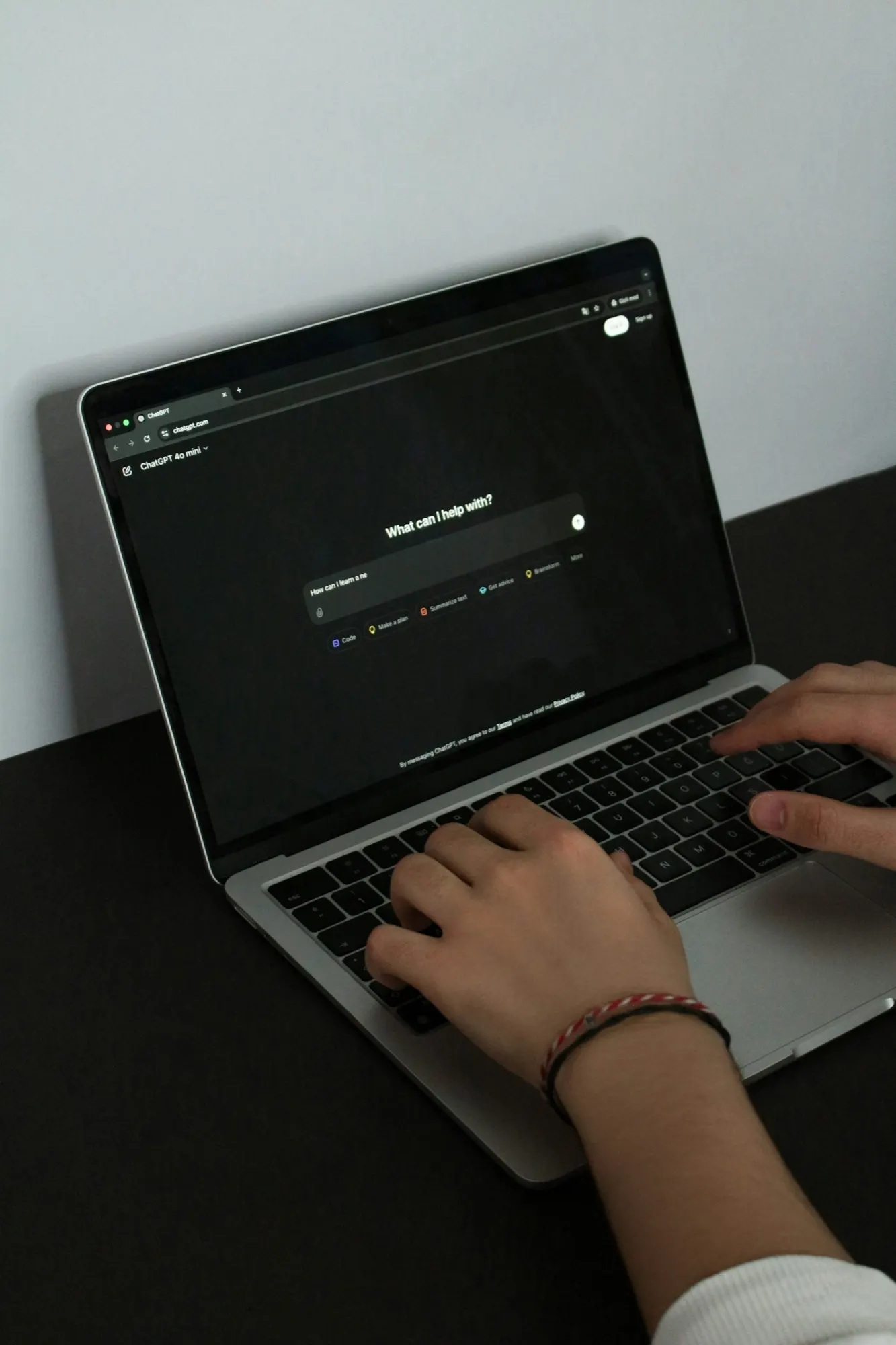
Short answer: ChatGPT and Google's AI recommend the therapists they can find and clearly understand on the web. That means a website page that says plainly who you help, with what, and where; Google, Bing, and directory profiles that agree with it; and nothing blocking the search crawlers. No one can pay to be recommended, but these steps make you a practice AI can match and cite.
In the past four months, every person who reached out to my practice found me through ChatGPT or Google, except two.
It wasn't always like that. When I opened my practice, I assumed referrals would fill it. I sent more than 50 networking letters, and the phone stayed quiet. It took about eight months to get real traction, because I hadn't built my practice around how people actually look for a therapist now. They do their own research, and more and more, they start by asking an AI assistant something like: "I'm a new mom in Austin with anxiety. Who's a good therapist near me?"
Here's how those assistants decide who to name, and the steps that help your practice be one of them. If you're still opening, these steps belong in starting your private practice from day one, not after.
Business education, not legal or ethics advice. Your licensing board's advertising rules always apply.
The short version
- People are using AI to choose providers. In an April 2026 rater8 survey of 992 U.S. adults, 47% said they'd used AI tools like ChatGPT or Google's AI Overviews to research healthcare providers, up from 31% about nine months earlier.
- AI assistants search the web first. ChatGPT's search draws on third-party search providers, widely reported to include Bing, plus OpenAI's own crawler. Google's AI answers draw on Google's own index.
- Your website is the biggest source. In BrightLocal's study of local searches in ChatGPT, business websites made up 58% of the sources it cited.
- Clear, consistent facts win. AI recommends the practices it can understand easily and that several sources agree about. Special files and markup aren't required.
- Expect 1 to 3 months before changes show up, and expect answers to vary from one try to the next.
In this guide
- How AI assistants pick which therapists to name
- The 10-step checklist
- What AI can read on your site
- What you don't need: llms.txt, special markup, and paid "AI SEO"
- What not to do
- How to check what AI says about you
- How long it takes, and how to measure it
- Frequently asked questions
How AI assistants pick which therapists to name
AI assistants don't have a secret list of therapists. When someone asks for a recommendation, the assistant runs a web search, reads a small set of results, and recommends the practices it can clearly match to the request.
ChatGPT searches the web through partner search providers, widely reported to include Bing, and its own crawler, OAI-SearchBot, then narrows the results to a few sources it can verify and link to. That's why your Bing presence matters even if nobody you know uses Bing.
Google's AI Overviews and AI Mode pull from Google's search results, including your website and your Google Business Profile. Google says there are no extra requirements: a page has to be indexed and eligible to show a snippet, and normal SEO practices apply.
In both cases, the assistant is looking for three things:
- A clear match. Does a page say plainly that you help this kind of person, with this concern, in this place?
- Agreement across sources. Do your website, Google profile, Psychology Today, and other directories say the same thing?
- Signs you're real and credible. A license number, a real address or service area, a consistent name, and professional listings.
The audience is growing. BrightLocal's 2026 consumer survey found that 45% of people now use ChatGPT or other AI tools for local recommendations, up from 6% the year before, and a March 2026 KFF poll found that 16% of U.S. adults had used AI chatbots for mental health information in the past year.
The 10-step checklist
- Add a "quick facts" section near the top of your homepage. List who you see, your specialties, your location or service area, which states you offer telehealth in, your fee, whether you take insurance or offer superbills, your license and license number, and how to book. Plain lists are easy for AI to read and quote.
- Make one page per specialty. "Postpartum anxiety therapy in Austin" as its own page beats one long services page. Use the words clients use ("I can't stop worrying about the baby"), not only clinical terms. Our guide to SEO keywords for therapists shows how to find those words.
- Write FAQ answers that start with the answer. "Yes, I offer virtual sessions anywhere in Texas," not "Great question!" AI quotes the first sentence.
- Use your name and practice name the same way everywhere. Same spelling, same credentials, same address and phone. "Dr. Jane Smith, PhD" on one site and "Jane Smith, LPC" on another looks like two people.
- Complete your Google Business Profile. Fill in categories, services, hours, and a description that matches your website. You can hide your address if you're telehealth-only. Google's own guidance says a Business Profile can help local businesses appear in its AI responses. Our Google Business Profile guide walks through setup and privacy, and the free checklist puts it in order.
- Claim Bing Places. You can import your Google profile in a few minutes. Most therapists skip this step, and it feeds ChatGPT's search.
- Claim Apple Business Connect, which feeds Siri and Apple Maps.
- Keep directory profiles current and consistent. Start with Psychology Today, then your professional association's directory and any specialty directories, like Postpartum Support International's. Our Psychology Today profile tips and free character counter help you write it.
- Don't block AI crawlers. Check your website's settings (in Wix, under SEO settings) so search and AI bots are allowed. In particular, allow OAI-SearchBot (ChatGPT search), Bingbot, and Googlebot. GPTBot is OpenAI's training crawler; blocking it opts you out of model training without removing you from ChatGPT search.
- Ask every new client how they found you. It's the only reliable way to know whether AI is sending you people.
How Well Launched helps: Well Launched runs an AI check for you. It asks AI the questions your future clients would ask about your specialty and city, shows whether you're named, and walks you through each fix. The Launch plan writes your quick facts, specialty pages, and FAQ with you. If your practice is already open, Refresh rewrites how you show up online, and Grow keeps you visible with a new post every week and a monthly AI-search report.
What AI can read on your site
| Easy for AI to use | Hard for AI to use |
|---|---|
| Plain text headings and lists | Text inside images or graphics |
| A page for each specialty | One page listing 20 specialties |
| FAQ answers that start with the answer | Answers buried after a long story |
| Your fee written as a number | "Contact me for rates" |
| Location and telehealth states spelled out | "Serving clients near and far" |
| The same facts as your Google and directory profiles | Old details left on a directory you forgot about |
Writing your fee as a number only helps if it's a fee you've worked out. Our guide to how much to charge for therapy has the formula. For the rest of the page-by-page layout, see website design for therapists.
What you don't need: llms.txt, special markup, and paid "AI SEO"
A lot of advice about AI search sells extra work. Google's 2026 guide to its generative AI features is direct about what it doesn't use:
| Common advice | What the sources say |
|---|---|
| "Add an llms.txt file" | Google says Search doesn't use llms.txt, and no major AI company has confirmed using it for answers. |
| "You need special AI schema markup" | Google says no special markup is required for AI features. Structured data is fine if it matches what's on the page. |
| "Rewrite every page in chunks for AI" | Not needed. Clear headings and plain answers help people and AI alike. |
| "Make a page for every search variation" | Mass-producing near-identical pages counts as scaled content abuse in Google's spam policies. |
| "Get mentioned everywhere, any way you can" | Google warns against inauthentic mentions. Real listings and professional directories are what count. |
The work that helps is the same work that helps people choose you: clear pages, consistent facts, and being listed where clients look. Our SEO for therapists guide and local SEO guide cover the Google side in more depth.
What not to do
- Don't ask current clients for reviews or testimonials. Ethics codes prohibit it: APA Standard 5.05, NASW 4.07(b), AAMFT 9.2 (2026 code), and ACA C.3.b (2014 code, which also covers former clients; ACA's revised code is due in late 2026). Our ethical marketing guide covers what you can say.
- Don't stuff keywords or make outcome claims. AI favors clear, credible sources, especially for health topics.
- Don't pay anyone who promises to get you "into ChatGPT." No one can guarantee what an AI says.
- Don't hide your fee or location behind a contact form. If AI can't find it, it can't match you.
How to check what AI says about you
Once a month (or let Well Launched's AI check do it for you), ask ChatGPT, Google, and Perplexity the questions your clients would ask, like "therapist for postpartum anxiety in [your city]" or "who helps with burnout in [your city] online." Note whether you're named and what sources the assistant cites. If a directory you've neglected keeps showing up, update it. Answers change from one try to the next, so look for patterns over a few months, not single results.
Also check the facts. In rater8's 2026 survey, 66% of people said they'd run into wrong information about a provider from an AI tool. If an assistant gets your fee, location, or license wrong, find the source it's citing and correct it there.
How long it takes, and how to measure it
Changes usually take 1 to 3 months to show up in AI answers, after search engines re-read your pages. The real measure isn't whether you appear once. It's whether new clients tell you they found you through AI or Google. For me, that's now nearly everyone who reaches out.
Three ways to track it:
- Ask on your intake form how the person found you, with "ChatGPT or another AI tool" as a choice.
- Check Google Search Console. Google counts AI Overviews and AI Mode traffic in its Performance report, and its 2026 guide points to a generative AI report there.
- Look at your website analytics for visits referred from chatgpt.com or perplexity.ai. Clicks from AI apps often show up as direct visits, so treat this number as a floor.
Frequently asked questions
How do I get ChatGPT to recommend my therapy practice?
Make it easy for ChatGPT's search to find and understand you. Publish clear pages for each specialty with your location, fee, and license; keep your Google, Bing, and directory profiles consistent; and don't block OAI-SearchBot or other search crawlers. No one can guarantee a recommendation.
Does ChatGPT use Google or Bing?
Bing, as far as is publicly known, plus OpenAI's own crawler. OpenAI says ChatGPT search works with third-party search providers, widely reported to include Bing, and OpenAI also runs its own crawler, OAI-SearchBot. That's why a Bing Places listing is worth the few minutes it takes.
Do people really use AI to find a therapist?
Yes, and the share is growing. In an April 2026 survey, 47% of U.S. adults said they'd used AI tools to research healthcare providers. In my own practice, all but two inquiries in the past four months came through ChatGPT or Google.
Do I need an llms.txt file or special schema for AI search?
No. Google says its search doesn't use llms.txt and that no special markup is required for AI features. A clear, indexed website with consistent facts matters far more.
Do reviews matter for AI search?
Reviews matter for many businesses, but therapists generally shouldn't solicit reviews from clients because of ethics rules. Focus on clear website content, consistent listings, and professional directories instead.
How long does it take to show up in AI search?
Usually 1 to 3 months after you update your website and profiles. Results vary from one question to the next, so check monthly.
Sources
- rater8, 2026 Patient Choice Report (April 2026 survey of 992 U.S. adults)
- KFF, poll on use of AI for health information and advice (March 2026)
- BrightLocal, where ChatGPT's local search sources come from (December 2024)
- BrightLocal, Local Consumer Review Survey 2026
- OpenAI, overview of OpenAI crawlers (OAI-SearchBot, GPTBot, ChatGPT-User)
- OpenAI Help Center, ChatGPT search
- Google Search Central, AI features and your website
- Google Search Central, guide to optimizing for generative AI features (2026)
- Bing, the new Bing Places for Business (October 2025)
- Apple Business Connect guide
- Search Engine Land: how ChatGPT conducts local searches
- Whitespark: ChatGPT, Bing, and review sources
- APA Ethical Principles of Psychologists, Standard 5.05
- NASW Code of Ethics, 4.07
- AAMFT Code of Ethics (2026)
- ACA Code of Ethics revision
Find out what AI says about your practice
Get the free checklist to start. If your practice is already open, Refresh and Grow are built for exactly this. See the plans and founding pricesprices.
Related: Free AI visibility check · How to start a private practice as a therapist · Therapist website examples · How much should I charge for therapy?
Photo by Berke Citak on Unsplash
Free tools: therapy fee calculator · startup cost calculator · rules by state · Psychology Today counter