Logos and Branding for Therapists: What Actually Matters for a Solo Practice
Short answer: for a therapy practice, branding is mostly clarity, not a logo. A simple wordmark logo, two or three calm colors, two readable fonts, and real photos of you, used the same way everywhere, are plenty; spend most of your energy on the words that say who you help and how you work.
Your brand is the feeling someone gets when they find you: whether you're for someone like them, how you sound, and whether they can picture talking to you. That comes mostly from words and photos. In my own practice, all but two of my new inquiries in the past four months found me on Google or ChatGPT, and what those tools match people to is words: who you help, where, and how.
Business education, not legal advice. Check your board's rules on business names and advertising, and check trademarks before you commit to a name.
The short version
- Words before visuals. Who you help, the problems you treat, and how you work come first.
- A simple logo is enough. A clean wordmark (your practice name in a good font) works well and costs little.
- Two or three colors, two fonts. Calm, readable, and used the same way everywhere.
- Real photos of you. People choose a person, not a palette.
- Consistency wins. The same name, description, and look on your website, Google, and directories.
In this guide
- What branding means for a therapist
- Your brand foundation: the words
- Logos for therapists
- Colors, fonts, and photos
- Where your brand shows up
- Branding mistakes to avoid
- What branding costs
- Frequently asked questions
What branding means for a therapist
In big companies, branding is a department. In a solo practice, it's three questions a potential client answers in about ten seconds on your website or profile:
- Is this person for someone like me?
- Do they sound like someone I could talk to?
- Do they seem trustworthy and professional?
Everything else, the logo, the colors, the fonts, exists to support those three answers. A beautiful logo with vague words loses to a plain page that says, "I help new moms who feel like they're barely holding on."
Your brand foundation: the words
Write these down before you design anything. They become your website, your profiles, and your logo brief.
| Piece | What it is | Example |
|---|---|---|
| Who you help | The specific people you're best for | "Women navigating pregnancy, postpartum, and early parenthood" |
| Their words | How they describe the problem | "I'm not myself since the baby." "I feel like I'm failing." |
| What changes | What life looks like after therapy | "Sleeping, laughing, and trusting yourself as a parent again" |
| How you work | Your approach, in plain words | "Warm, practical, and collaborative, with tools you can use this week" |
| Your voice | Three words for how you sound | Calm, direct, kind |
| Practical facts | Location, format, fee, insurance | "In person in Austin and online across Texas; $160 a session" |
Your voice matters more than people think. If you're warm and a little funny in session, a stiff, clinical website sets the wrong expectation. Write the way you talk.
Logos for therapists
A logo has one job: to be recognizable and to look professional at small sizes, like a browser tab or a business card.
- A wordmark is often best. Your practice name in a well-chosen font. Simple, timeless, and readable.
- If you add a mark, keep it simple. A leaf, a tree, or a wave is common in therapy logos, which is fine, but it won't set you apart. A clean wordmark often looks more confident.
- Test it small. If you can't read it at the size of a phone icon, simplify it.
- Make a few versions: full logo, a square version for profile photos and your browser tab icon, and a one-color version.
- Own the files. Get the original files (SVG and PNG) and, in writing, the rights to use them.
| Logo style | What it looks like | Works well when |
|---|---|---|
| Wordmark | Your practice name in a chosen font | Almost always; the simplest, most timeless choice |
| Initials or monogram | "LO" or "ET" in a simple frame | Your name is long, or you want a small square mark |
| Simple symbol plus name | A single line drawing (leaf, tree, wave, sun) beside the name | The symbol connects to your name or place, like an oak leaf for a practice named after a tree |
| Illustrated or detailed | Multiple shapes, gradients, or scenes | Rarely; detail disappears at small sizes |
Can you use AI or a template? Yes, for a starting point. AI logo tools and design templates are fast, but many produce similar-looking marks, and the U.S. Copyright Office's guidance is that purely AI-generated material isn't protected by copyright. If owning your mark matters to you, use AI for ideas and have the final version made or meaningfully edited by a person.
Check your practice name before you design around it: your state's business registry, a domain, Google Maps near you, and the free USPTO trademark search. Some boards also have rules on practice names and advertising, such as requiring your name or license type to appear; our state-by-state guide links to each board.
Colors, fonts, and photos
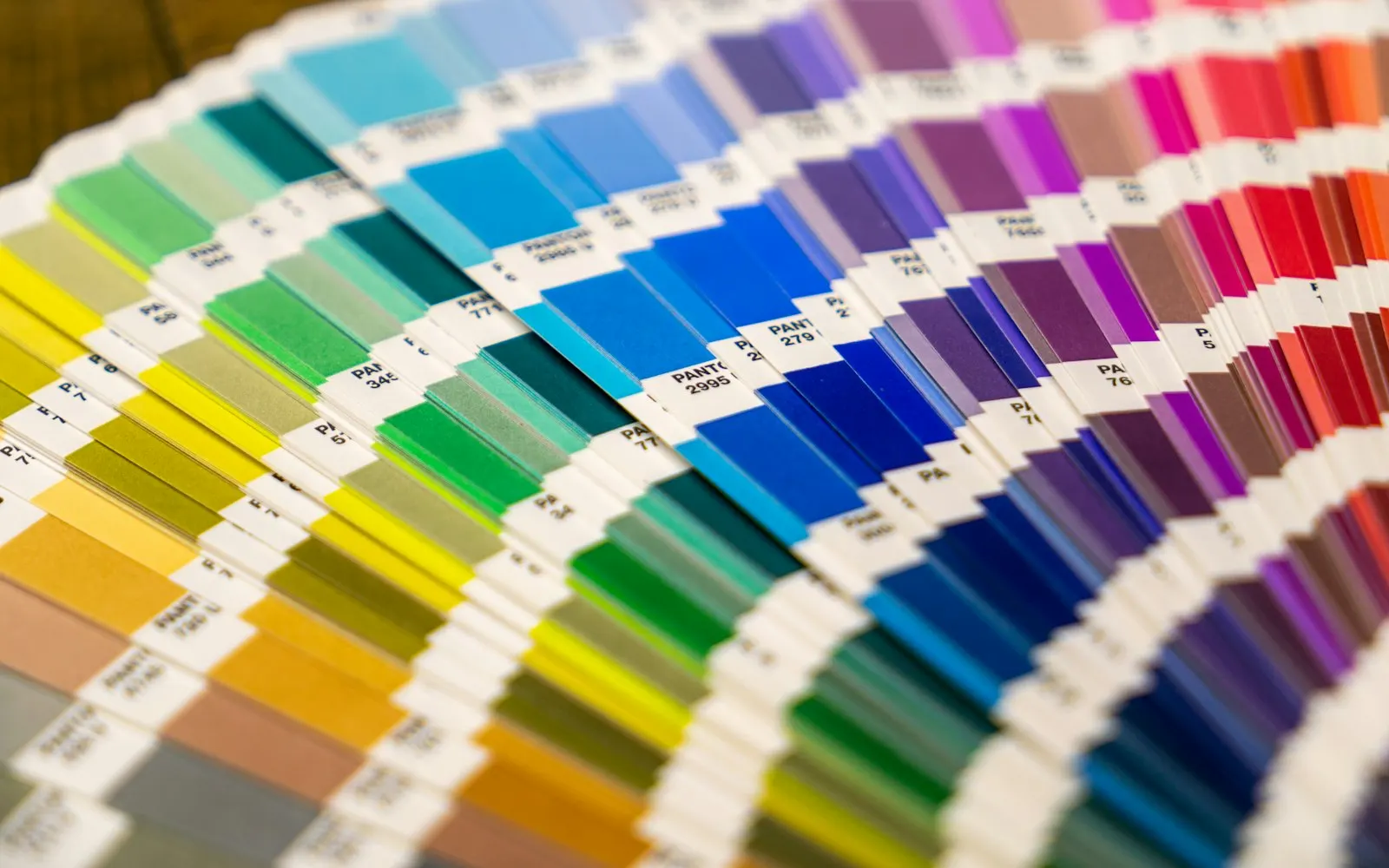
Colors. Pick one main color, one accent, and a neutral background. Calm, natural tones are common in therapy for good reason, but choose what fits your clients: a practice for teens can be brighter than one for executives. Make sure text has enough contrast to be readable; the W3C's accessibility guidelines recommend a contrast ratio of at least 4.5 to 1 for normal text.
Fonts. Two is plenty: one for headings, one for body text. Body text should be easy to read on a phone, at least 16 pixels.
Photos. Use real, recent photos of you, your office, and your entrance. They matter more than any color choice, because people are choosing a person. Avoid stock photos of people that look like clients. See therapist headshots for what works.
| Brand piece | Keep it to | Why |
|---|---|---|
| Colors | 1 main, 1 accent, 1 neutral | Looks calm and consistent |
| Fonts | 2 | Readable and professional |
| Logo versions | Full, square, one-color | Works everywhere |
| Photos | Real photos of you and your space | Trust comes from seeing you |
Where your brand shows up
Consistency is what makes a brand work, and it also helps search. When your name, description, and specialties match across sites, Google and AI tools are more confident about who you are.
- Your website: every page, in your voice.
- Google Business Profile: your logo, photos, description, and services. See our Google Business Profile guide; Google asks that your profile name match your real-world business name, without extra keywords.
- Psychology Today and other directories: the same description and photo.
- Paperwork: your logo and colors on intake forms, your Good Faith Estimate, and invoices.
- Email signature: name, license, practice name, website, and a 988 line.
- Business cards, if you still use them for referral partners.
How Well Launched helps: with Launch, your brand is built with you, in order: who you help and how you sound first, then your colors and fonts, then a logo made from your name, colors, and fonts (full, small mark, and one-color versions, as SVG and PNG). Launch then designs, builds, and hosts your website in that look, and your site is yours to download or move anytime. Blueprint walks you through the words-first steps with prompts to do the design yourself. See plans and founding prices.
Branding mistakes to avoid
- Starting with the logo. It feels productive, but without clear words it's decoration.
- Too many specialties. Ten specialties tell a reader you're not focused on their problem.
- Clinical language only. "Evidence-based, integrative modalities" doesn't help someone decide.
- Different descriptions everywhere. A website that says one thing and a directory profile that says another confuses people and search engines.
- Stock photos of "clients." They feel generic, and they can mislead.
- Hard-to-read design. Light gray text on a cream background looks elegant and frustrates everyone over 40.
What branding costs
Prices as of November 2026. Design-tool and contest prices come from current pricing roundups; designer and agency ranges are estimates.
| Option | Typical cost | Good for |
|---|---|---|
| Do it yourself with a free design tool | $0 | A simple wordmark and colors |
| Paid design tool (for example, Canva Pro) | About $15 to $18 a month; sources disagree after a 2026 price change | Templates, brand kit, and fonts in one place |
| Freelance marketplace | About $50 to $500 (estimate) | A simple logo, with mixed quality |
| Design contest (for example, 99designs) | From about $249 to $299 for the entry tier | Many options to choose from |
| Freelance designer | About $500 to $2,500 (estimate) | A logo and basic brand guide |
| Branding agency | $3,000 and up (estimate) | Larger and group practices |
| Federal trademark application | $350 per class at the USPTO, plus surcharges in some cases | Protecting a business name you plan to keep |
Branding is one line in your opening budget. The startup cost calculator shows how it fits with everything else, and the cornerstone guide to starting a private practice shows where it falls in the order.
For a solo practice, a simple, consistent brand you can launch this month beats a perfect one you're still waiting on in six months. You can refine it once you're full and know your clients better.
Frequently asked questions
Do therapists need a logo?
Not strictly, but a simple one helps you look consistent and professional across your website, Google profile, and paperwork. A clean wordmark, your practice name in a good font, is often enough.
What colors are best for a therapy practice?
Calm, readable colors that fit your clients: often soft natural tones, but brighter palettes can suit teens or families. Use one main color, one accent, and a neutral, and make sure text has strong contrast.
How much does a therapist logo cost?
Anywhere from free (do it yourself) to about $500 to $2,500 with a freelance designer. Agencies cost more. Own the original files whatever you choose.
Should my practice use my name or a business name?
Either works. Your own name builds trust and fits a solo practice; a business name is easier to grow or sell later. Check your board's naming rules and do a trademark search first.
Should I trademark my therapy practice name?
Maybe. A federal trademark application costs $350 per class at the USPTO, and many solo practices using their own name skip it. If you're building a business name you plan to grow, search the USPTO database first and consider asking a trademark attorney. This isn't legal advice.
Can I use an AI logo generator for my practice?
Yes, as a starting point. Keep it simple and test it small. Purely AI-generated images generally can't be copyrighted, so have a person refine the final version if owning it matters to you.
What's more important, my logo or my website words?
Your words. People decide whether you're right for them by reading who you help and how you work. A logo supports that; it can't replace it.
Sources
- U.S. Patent and Trademark Office, search trademarks
- W3C, Web Content Accessibility Guidelines: contrast minimum
- Google Business Profile Help, guidelines for representing your business
- U.S. Copyright Office, Copyright and Artificial Intelligence, Part 2: Copyrightability (January 2025)
- USPTO trademark fee changes effective January 18, 2025 (Perkins Coie summary)
- Moda, Canva pricing (checked September 2026) and Piktochart, Canva pricing 2026
- Hire in South, 99designs pricing 2026
Look and sound like one practice
The free checklist lays out every step to open your practice for your license and state. Launch builds your brand, website, and profiles with you.
Related: Website design for therapists · Therapist headshots · How to market yourself as a therapist · Therapist website examples · Practice name checker
Photo by Mika Baumeister on Unsplash
Free tools: therapy fee calculator · startup cost calculator · rules by state · Psychology Today counter